> For the complete documentation index, see [llms.txt](https://eslam3kl.gitbook.io/blog/llms.txt). Markdown versions of documentation pages are available by appending `.md` to page URLs; this page is available as [Markdown](https://eslam3kl.gitbook.io/blog/hack-the-box-machines/mirai-walkthrough.md).
# Mirai Walkthrough
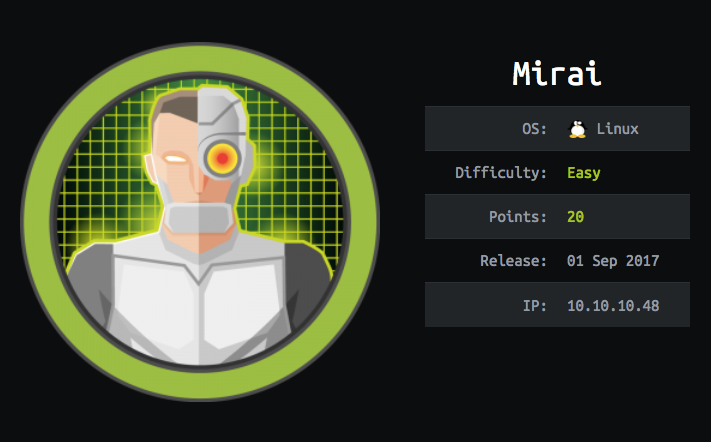
Welcome all at walkthrough for **HackTheBox** machine “**Mirai**”. Let’s take a look at the machine’s information
Okay it’s easy and based on Linux OS, let’s get started…
## **Nmap Scan**
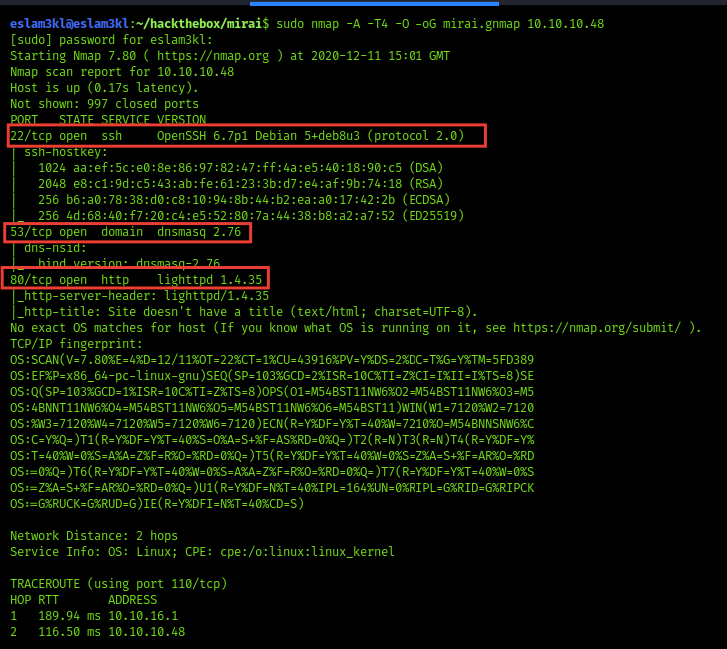
In this step, we aim to know all open ports and the services which work on them and other information we will see it now
`nmap -A -T4 -O -oG mirai.gnmap 10.10.10.48`
We used `-oG` to generate results in a file with `gnmap` ext to use it through brute-forcing credentials if there’s a port that may be brute-forcing like `ssh/ftp`
We have 3 open ports and 3 services working on them, for now just note them in any text file upon we finish collecting information steps
## **Website Enumeration**
In this step, we will review the source code, check the functions, discover hidden directories, check the response header, and so on.
At first, we will use `nikto` to check for a bunch of information and from the results, we found there’s an unfamiliar response header `x-pi hole` so note it.
Let’s discover the hidden directories, you can use `dirsearch/dirbuster/gobuster/ffuf/metasploit modules` or any tool which performs the same task
`python3 dirsearch -u 10.10.10.48 -e php -t 40`
Dirsearch results
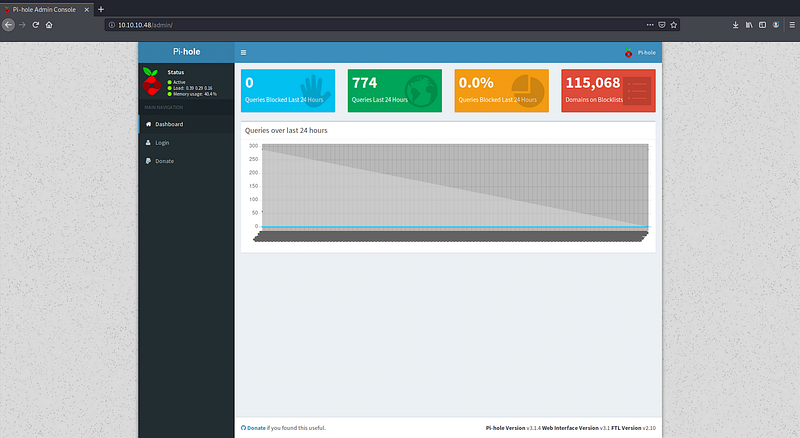
Now we have `/admin` the directory is available and when you're open it you will find the default admin page for **Pi-Hole, but** you’re not authenticated, and you need to log in as an admin
The version of Pi-Hole is at the bottom as you can see at the bottom of the page but after searching for exploitation related to this version I’ve faced a problem that I must be authenticated as you can see here
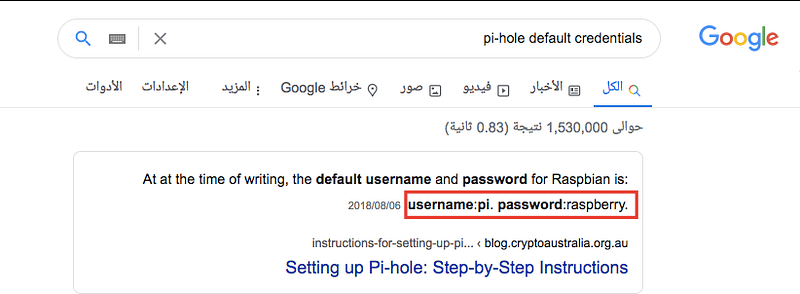
So I tried to search for the default credentials for Pi-Hole, and I’ve found it
If you try to use these credentials to log in to the admin panel you will fail, so I’ve used a new technique to know what are these credentials valid for.
I’ve used a new tool called `medusa`
> Installation: `apt-get install medusa`
We will check for ssh credentials
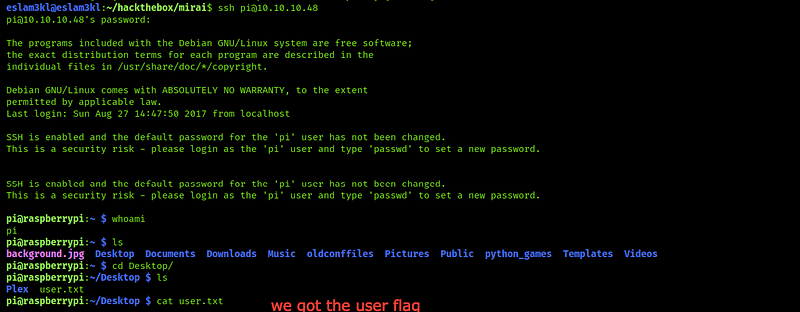
And it’s valid. Let's login to ssh using these credentials
Good, we now have user privileges and get the user flag. Let’s try to get the `root` role and search for root flag.
I’ve just typed `sudo su` to be admin, easy right? But unfortunately the root flag isn’t easy :(
Let’s do small google search about `usb stick in kali terminal` to know where I will search exactly
As you can see I’ve found this resource and the directory which should have the flag, let’s search for it
good we have this file, after opening it `cat sdb`
We have the flag now :):)